
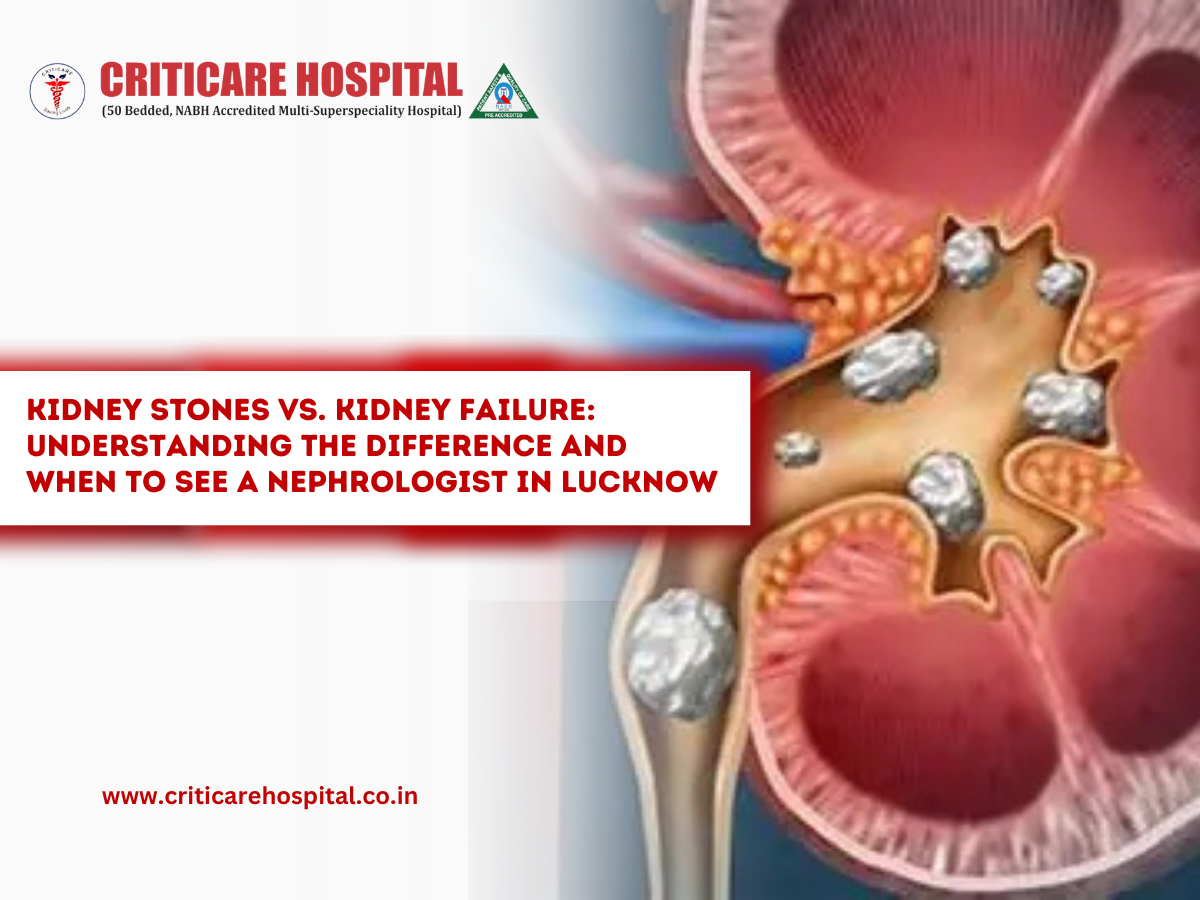
The phrase kidney problem tends to evoke a lot of concern for good reason. There are many kidney problems, however, and it’s easy to panic if you have them – or fail to seek timely care if you do. The two conditions of kidney stones and kidney failure are far from the same, and they have different meanings, symptoms, and treatment. Knowing this distinction can assist you in remaining calm and seeking the appropriate care when it is needed.
So What are Kidney Stones?
Kidney stones are hard deposits of minerals and salt in the kidneys. These can be as small as a grain of sand or as big as a little pebble, and the discomfort they may cause depends on the size. Stones are usually created when the urine becomes concentrated, allowing minerals to crystallise and clump together. This is often due to dehydration, a high-salt or high-protein diet, and sometimes to a genetic predisposition to stone formation. Kidney stones, although painful, can be treated, and they often pass on their own if you’ve been taking steps.
What is Kidney Failure?
Kidney failure, on the other hand, is a much more severe condition in which the kidneys’ ability to adequately filter wastes and extra water from the blood is lost. This may occur suddenly (acute kidney failure) and can be caused by heavy infections, dehydration or certain medications. It may also occur over months or years and is called chronic kidney disease, typically associated with other longstanding conditions such as diabetes, high blood pressure and frequent urinary tract infections. Unlike stones, kidney failure affects the primary function of the kidney and, if not managed properly, can have severe and lasting effects.
Signs and symptoms of Kidney Stones
Kidney stones are extremely painful and are said to be one of the most intense types of pain a person could experience. It typically begins in the back or side, near the ribs and may travel down to the lower abdomen and groin area as it passes. In addition to pain, you may also experience blood in the urine, frequent urination, nausea or burning urination. These symptoms occur in waves and may be severe, but are typically confined to the area and do not involve other systems of the body.
The signs and symptoms of kidney failure
Though kidney failure tends to manifest differently, it can have subtle early signs. Common signs are fatigue, leg and ankle swelling, decreased urine output and constant nausea. Certain symptoms may appear as the condition worsens, such as confusion, difficulty breathing or a bitter taste in the mouth. Many people may not know that anything is amiss until the kidneys have already lost a substantial amount of their function in chronic cases, as the symptoms slowly develop.
The differences between the two are of great importance
The best way to distinguish these two is to inspect the condition in reality by examining the actual body processes. Kidney stones are a physical blockage: a stone (solid mass) that causes pain as it passes through the urinary tract. Kidney failure is a functional problem, in which the kidney is having trouble performing its normal duties (filtering blood). A stone is typically a localised and correctable problem, whereas kidney failure can be a more widespread problem over time that may impact health, energy levels and other organs. One other key distinction relates to urgency – kidney stones require prompt treatment to relieve pain, whereas kidney failure may require ongoing and long-term management on a medical basis.
Is it possible for kidney stones to cause kidney failure?
It is a frequent question, and the answer will be either yes or no depending on the circumstances. Most kidney stones will not cause kidney failure unless they are treated in time. If stones are large, prevent urine from flowing for long periods of time, or if they occur frequently without being eliminated, the stones may damage over time the tissue of the kidneys. That’s why even a mild case of kidney stone can be a problem, and should not be ignored for a second time – for in rare instances, untreated blockages can cause kidney damage over time.
When to Talk to Your Kidney Doctor?
A nephrologist specialises in kidney health, and it can be crucial to see how your treatment goes if you know when to call one. If you have recurrent kidney stone problems, if your leg swelling doesn’t go away, or if you are just experiencing unusual fatigue that doesn’t go away or if you notice changes in your urination pattern, it’s time to make an appointment. Likewise, if you already have medical conditions such as diabetes or hypertension, it’s important to regularly check with a nephrologist to detect early signs of kidney disease.
Prevention Matters: For Both Conditions
The two are distinct but there are some preventive measures common to them. Drinking plenty of water, eating a balanced diet (with limited salt), keeping blood pressure and blood sugar levels in check, and avoiding heavy consumption of some pain medications can help maintain healthy kidneys. Periodic health evaluations also can discover early warning signs, before these escalate to larger issues, such as a developing kidney stone or worsening kidney function.
Please call the Right Expert at Criticare Hospital
Our skilled nephrologists at Criticare Hospital, Lucknow, are well-versed in diagnosing and treating kidney stones as well as kidney failure through tailor-made treatment plans. From sharp pain that comes out of nowhere to chronic kidney issues, it is always time to get advice. Don’t let symptoms get worse. Contact Criticare Hospital today and start taking steps to improve your kidney health!