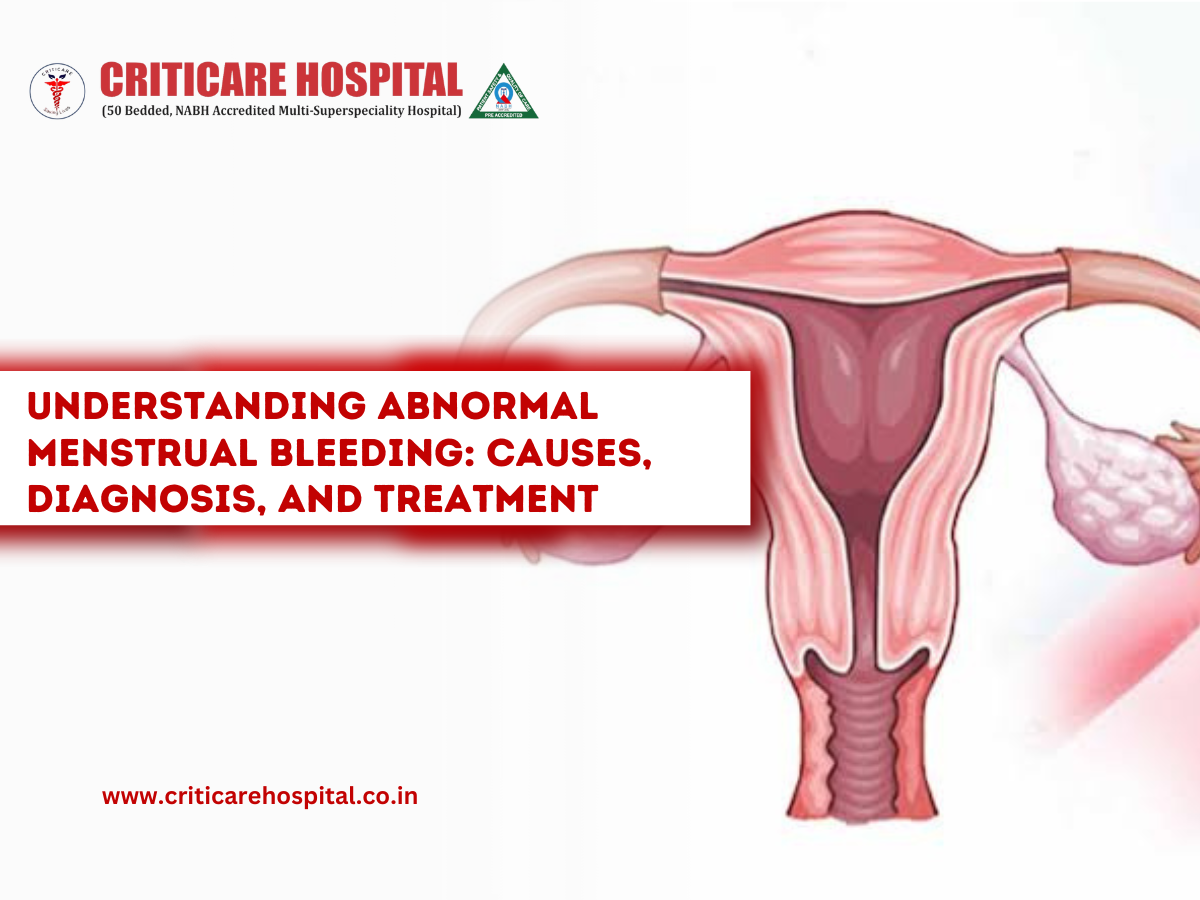
Each woman’s period is different -but there’s a wide variety of normal. The duration of a typical cycle is 21 to 35 days, the duration of a period is 2 to 7 days, and loss of blood is manageable without significant disruption to daily life.
If bleeding occurs outside of this range regularly, whether it is too heavy, too long, too often, irregular, or does not occur when it is expected, then it is considered abnormal menstrual bleeding. This is one of the most frequent reasons that women seek a gynaecologist, but many women go on suffering in silence for months or years and think that their condition is normal for them.
In Criticare Hospital, Lucknow, we want every woman to be confident enough to know when something is wrong and to take a step towards getting proper care. This blog is designed to help you understand, in easy-to-comprehend steps, the causes, diagnosis and treatment of abnormal menstrual bleeding.
What is considered Abnormal Periods?
Abnormal menstruation refers to several different periods. One of the most common presentations is very heavy bleeding (soaking through a pad or tampon every hour for several hours in a row or for more than 7 days). Those periods that occur less than every 35 days or more than every 21 days are also abnormal. Abnormal bleeding that needs immediate medical attention is bleeding between periods, bleeding after sex, and bleeding after menopause. This includes painful periods that last to the extent that they interfere considerably with everyday activities.
There are several reasons which can cause irregular periods
Abnormal periods can be caused by various factors, including hormone imbalances and uterine abnormalities. It is important to understand the most common causes, as this will help to account for why proper diagnosis is important prior to any treatment being decided.
Hormonal Imbalances: The system of hormones, with oestrogen and progesterone being the main ones, regulates the menstrual cycle. If this balance is thrown out of sync, the uterine lining can thicken too much, shed too much or bleed too often. Hormonal imbalances usually occur during adolescence and the years leading up to menopause, but can happen at any time of life. Abnormal bleeding can be a common occurrence and can be caused by a variety of hormonal conditions such as PCOS, thyroid issues, and elevated prolactin.
Uterine Fibroids: Fibroids are non-cancerous growths that grow in or on the wall of the uterus. They are very common and in the majority of cases do not cause any symptoms; if they do, they are amongst the most common complaints, such as heavy, prolonged periods. How serious the bleeding problem is depends on the size and location of the fibroids in the uterus.
Endometriosis and Adenomyosis: Heavy periods with severe, prolonged pain, plus pelvic pain, are all symptoms of endometriosis and adenomyosis, where uterine tissue grows outside the uterus and inside the muscular wall of the uterus, respectively.
Polyps: Benign growths on the inner surface of the uterus or the cervix can cause irregular periods, bleeding between periods and heavy periods. They’re typically easy to diagnose and treat if they’re investigated properly.
Medications and Contraceptives: Some medications (such as blood thinners, hormonal contraceptives and some antidepressant medications) can also cause changes in menstrual bleeding. The most common side effects reported by women while taking hormonal contraceptive methods are irregular bleeding.
What are the tests for abnormal menstrual bleeding?
The first step in the evaluation of abnormal bleeding by a gynaecologist is to conduct a thorough history taking, including your menstrual history, symptoms, and medical history. This will help the doctor to suggest appropriate investigations. Blood tests include anaemia (commonly develops from heavy bleeding), hormones and thyroid function. A pelvic ultrasound will provide a detailed view of the uterus and the ovaries and help detect fibroids, polyps, uterine lining thickening or ovarian cysts. A hysteroscopy (a thin camera inserted into the uterus) may be suggested in some cases for a more detailed and direct examination of the uterine lining and to take a tissue sample for examination if needed.
Treatment for Abnormal Periods!
Treatment is solely based on the type of cause found, the extent of symptoms, the woman’s age and her desire to maintain her fertility. The approach to treatment is different for each person, as no single technique applies to everyone – hence the critical importance of a correct diagnosis before treatment commences.
Hormonal Treatment: In many cases, the initial treatment for women is hormonal. Oral contraceptive pills, progesterone tablets or a hormonal IUD can help to regulate the menstrual cycle, improve the flow of blood and offer a lot of symptom relief – especially for those associated with hormone imbalance or adenomyosis.
Non-Hormonal Medication: Some non-hormonal medicines can help to lessen the amount of blood women lose during their periods and cope with period pain. These can be especially beneficial for those women who cannot, or do not want to take, hormonal therapies.
Surgical Treatment: If structural problems are discovered (like fibroids or polyps), the surgery to remove them might be suggested. The procedures vary from minimally invasive hysteroscopic removal of polyps or small fibroids to more extensive surgery depending upon the size and location of the problem. Endometrial ablation (the removal of the inside of the uterus) or sometimes hysterectomy might be recommended for women who are finished with childbearing and have significant, difficult-to-control bleeding.
Conclusion
Abnormal periods shouldn’t be taken for granted, especially by women. It impacts quality of life; it causes physical fatigue due to loss of blood, and, in most cases, would indicate some underlying condition which is very manageable if caught early and treated.
Our skilled genecologist in Lucknow, offers comprehensive and sensitive evaluations and customised treatment strategies for women at any age who are experiencing abnormal menstrual bleeding. Don’t wait; if your periods are not feeling normal, book your consultation today.