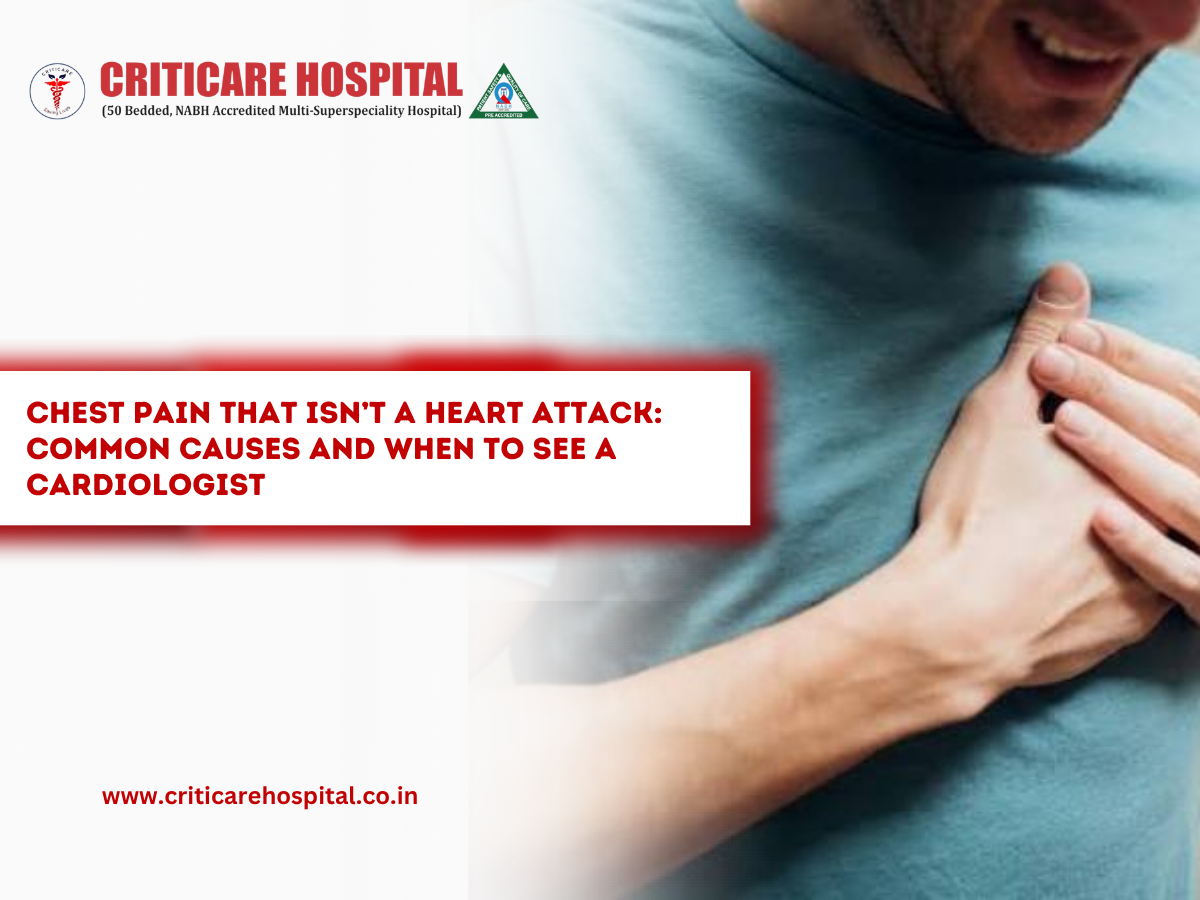
Anyone with chest pain can be frightened. Thoughts usually run along the lines of, “Is this a heart attack?” This fear is normal, and it is important not to underestimate the importance of chest pain. Fortunately, many people who experience chest pain do not have a heart problem. Chest pain which is not a heart attack is very common, and there are a variety of causes. This blog will cover these causes and give you an idea of when it’s time to see a cardiologist.
Why don’t you always take chest pain seriously?
The heart, lungs, food pipe, muscles, ribs and nerves are in the chest. They can all cause pain that feels alike, making it difficult to determine the source from the sensation of the pain. Tests are necessary to be sure, even for doctors. This is why you should never guess at home. If the pain is new or intense or accompanied by other symptoms, check it out as soon as possible.
Other common causes of chest pain besides a heart attack
Chest pain can be caused by many things other than a blocked heart artery. Having them can alleviate your anxiety, but not taking the place of a thorough exam.
Acid Reflux and Gas
This is one of the most frequent ones. The force of the stomach acid rising up into the food pipe results in a burning sensation behind the breastbone. This is termed acid reflux. Usually it deteriorates after eating a large meal or a spicy meal, after lying down, or forward bending. In addition to this, you may experience a sour taste in your mouth or lots of gas. The pain associated with reflux may be relieved by an antacid, but this does not rule out the possibility of it being the heart.
Muscle and Rib Pain
Heavy lifting, hard coughing, sleeping position or an injury to the rib muscles or cartilage can cause them to become strained. The pain is typically sudden and persistent, and worsens upon pressure, a deep breath or body movement. Another common cause is a condition known as costochondritis, which occurs when the rib cartilage is swollen.
Anxiety and Panic Attacks
Worry and stress can have a physical effect. Anxiety can cause tightness in the chest, rapid breathing, a racing or pounding heart, sweating and shaky hands. It can seem just like a heart disease, so people are even more frightened. Chest pain and anxiety often both occur together, and the pain typically subsides once the person relaxes. But the doctor should rule out heart disease as the cause of this first.
Lung Problems
Chest pain can result from an infection such as pneumonia, swelling (inflammation) of the lining of the lung, asthma or a blood clot in the lung. This pain tends to increase with breathing or coughing and can be accompanied by fever, cough and/or difficulty breathing. It is serious to have a blood clot in the lung and requires timely treatment.
Other Causes
A viral infection of the skin, called shingles, may lead to burning chest pain before the rash is visible. Stones in the gallbladder and stomach ulcers may also cause pain in the chest. In some instances, it is due to problems with the heart, but without a heart attack. The outer lining of the heart may swell and cause a sudden onset of pain which is better when leaning forward (pericarditis).
What is the difference between heart attack pain and other pain?
Common symptoms of a heart attack are a pressure, heaviness or squeezing sensation in the middle or left chest. The pain can radiate down the arm, to the shoulder, jaw, neck or back. May be accompanied with sweating, nausea, dizziness and/or shortness of breath. Some people, including women, the elderly, and those with diabetes, may experience only discomfort, tiredness, or breathlessness. Signs may vary so don’t assume it’ll pass itself; wait to see.
When to go to the Emergency Room
If the chest pain persists for more than a few minutes, if it is pressure or squeezing, if it radiates down the arm or jaw, or if it is accompanied by sweating, breathlessness, fainting or vomiting, move to the nearest hospital or call for help immediately. Avoid driving yourself. Don’t delay its treatment.
A cardiologist is a doctor specialising in the heart
Timely referral to a cardiologist can help safeguard your heart in the long run. If you experience discomfort in your chest when you are walking, climbing stairs or working, and the pain goes away with rest, then call for an appointment. If you experience chest pain regularly with no known cause, a fast or irregular heartbeat, or you feel breathless or extremely tired frequently, also see a doctor. Individuals who have diabetes, high blood pressure, high cholesterol, a family history of heart disease or who smoke should be particularly vigilant and should have routine heart health checkups.
Tests that aid in identifying the cause
The doctor begins with a physical exam and your medical history. An ECG test is a quick test that lasts only a few minutes and shows the activity of your heart. A blood test will determine if the heart muscle is damaged. Depending on your symptoms, other tests can be performed, such as an echo, a treadmill test, a chest X-ray or a scan. These tests will help to determine whether the issue is in the heart or elsewhere.
Heart Care You Can Trust
Whether chest pain is due to a heart attack or some other cause, get it checked by experts. In the Chest Pain Unit, we perform accurate diagnosis and treatment of chest pain promptly, using appropriate tests and accurate guidance. For cardiac health services, come to us and avail the best cardiac doctors in Lucknow and get answers for your peace of mind.