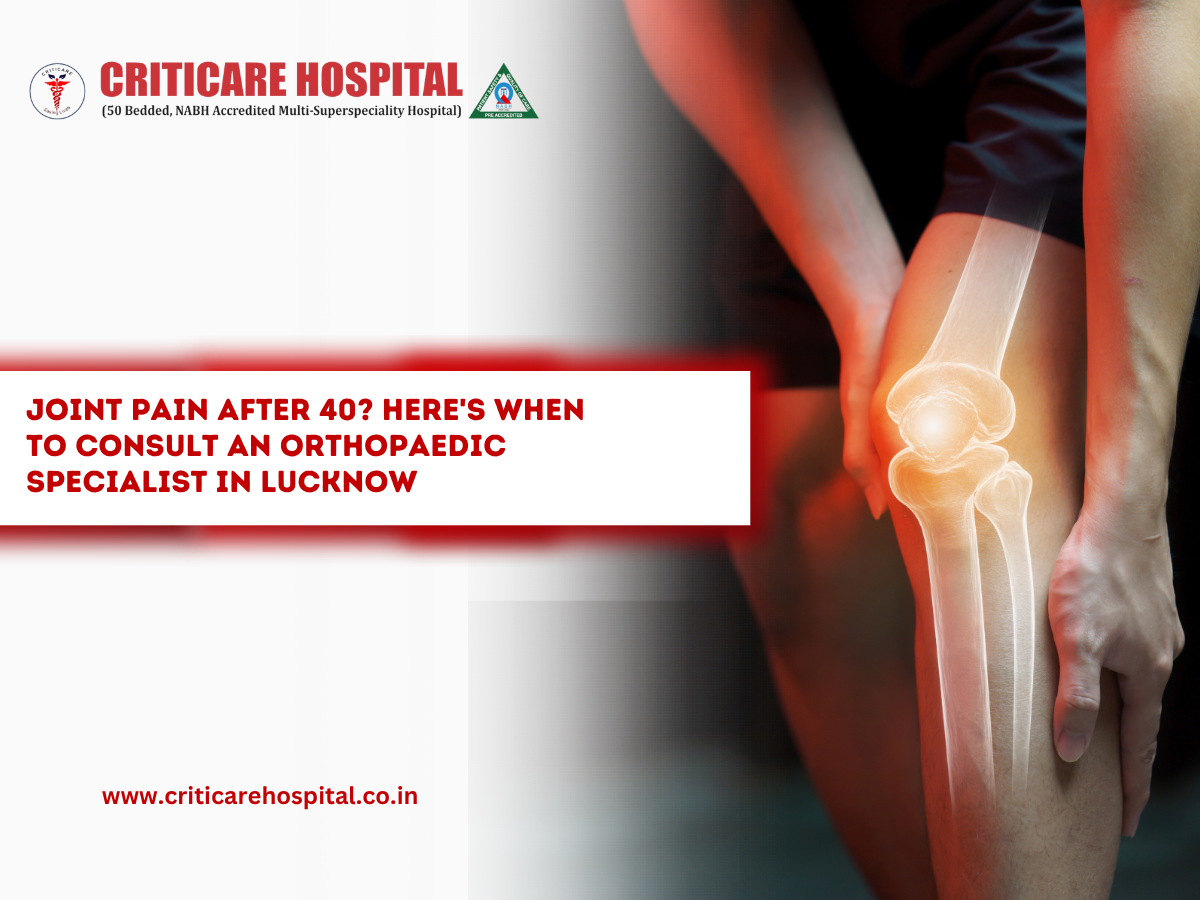
You can experience a bit of a transition when you reach the age of 40, but this transition is hidden and gradual, and a lot of people ignore it for months, perhaps years. The knee that every bit as little stiffens when walking up and down stairs, the ache in the shoulder after a day’s work, or the back that is no longer as steady as it once was. These changes occur regularly, but not always without consequences. Understanding the time to take action when the symptoms you’re experiencing are actually a warning sign is key to preventing a larger issue.
The reason why joint pain is more common after 40 years
As people get older, the cartilage which fills the joints starts wearing out naturally, and the fluid within the joints which lubricates the joints also deteriorates with age. With years of daily use, unhealed past injuries and lifestyle factors such as less exercise or additional weight on the joints, joint discomfort becomes a pretty common issue after the age of 40. This doesn’t mean that pain is an inevitable part of getting older, but knowing the causes of pain can help you recognise when it needs to be addressed.
Everyday Aches and More or Less Serious
Not all aches are signs of a specialist. If stiffness occurs after a long day, or a little soreness after doing something out of the ordinary, or it’s just a little discomfort that goes away after resting, then it’s probably not a big deal. The difference is in the patterns. If it comes back again and again, or if it doesn’t go away after a day or two, or if it stops the way you normally move, it isn’t just a normal joint ache. The first step in determining whether or not it’s time for a doctor’s visit is recognising these patterns.
The following are a few signs that you should not ignore
This is pain that lasts longer than a few weeks. It’s pain that isn’t gone after a few weeks.
If joint pain is a regular occurrence, but it goes away with rest, it is likely a temporary problem that will pass and is not a cause of concern. If it is regular and does not go away, no matter how much the individual restricts activity, it is probably a problem that needs to be evaluated to get better advice, and is not a problem that can be fixed with home remedies.
Warmth or swelling around a joint
When a joint is swollen, red or warm to the touch, it may mean the joint is inflamed, or there is another underlying condition that is causing the problem with the joint tissue. This is a big indicator that self-managed care isn’t enough anymore.
Limited range of motion
If you find that you can no longer bend your knee fully, lift your arm easily, or move a joint the way you did before, something’s likely changing at a structural level, which a specialist should review.
A Grinding or Clicking Sensation means the sensation of the teeth grinding or clicking
If it feels like someone is grinding, popping or clicking when moving, and it is uncomfortable, it may indicate cartilage wear or misalignment of the joint, and can be prevented if caught early.
Sleep Disruption or Disturbing Daily Activities
If joint pain is interfering with your sleep or makes it hard to walk, climb stairs or get up from a chair, it is more than you can tolerate!
Post-Injury pain that did not resolve completely
If an old injury that subsided years ago is still causing periodic pain, it indicates that the injury wasn’t fully resolved or that other joints are overworking.
Morning stiffness of >30 minutes
Though it is common to experience morning stiffness, if it takes longer than half an hour to improve, it may be a warning sign of treatable joint conditions.
There are several common causes of joint pain after 40
Many health issues tend to occur around this time. One of the most common is caused by a slow deterioration of the cartilage in the joints, particularly the knees, hips and hands, known as osteoarthritis. Repetitive shoulder or elbow pain can be related to tendon problems, which are usually caused by lack of flexibility or repetitive strain. However, some joint pain can also be associated with other health problems, such as some metabolic or inflammatory conditions, so it’s important to have a diagnosis, not assume it, and not jump to conclusions.
The value of early consultation is undeniable
Too many take too long to visit an orthopaedic physician, even after the pain persists, sometimes hoping it will resolve itself. However, early help is often the provision of simpler, less intrusive treatments and therapies, for example physiotherapy, lifestyle advice, and specific drugs, instead of more extensive interventions which will be required once a condition is more advanced. Early detection of joint problems also prevents the strain that might be placed on other muscles and joints as a result of the change in movement caused by pain.
During a consultation, your child is likely to experience the following:
The initial orthopaedic evaluation will include a comprehensive history and discussion of your symptoms, medical history and activity level. This is typically followed by a physical examination to evaluate motion, strength and tenderness. Your doctor may recommend imaging tests to better understand what is going on in the joint, depending on the results. For these, a customiSed treatment plan is put together, from more conservative to more advanced if necessary.
Other lifestyle factors that can help keep your joints healthy:
In addition to medical treatments, some lifestyle factors actually promote joint health in ageing. Being at a healthy weight decreases the pressure on joints such as the knees and hips. Low-impact exercises like walking or swimming help keep joints moving but not as hard as they would be with other activities. What is important in maintaining a healthy diet, water intake and the avoidance of prolonged periods of inactivity all help to keep the joints healthier through the years.
At Criticare Hospital, we provide expert orthopaedic care
Our orthopaedic doctors offer comprehensive assessment and customised treatment for joint pain at every stage of treatment at Criticare Hospital, Lucknow. We diagnose and treat joint conditions at all stages of severity, and offer a variety of treatment solutions tailored to each person’s individual needs and lifestyle.
After 40, it’s not normal to have joint pain, and it doesn’t have to be an inconvenient part of your life. Early recognition and prompt treatment may be the difference between a straightforward and effective treatment and a more complex treatment later on. Should any of these symptoms resemble you, please contact Criticare Hospital and see a specialist in Orthopaedics in Lucknow right away.