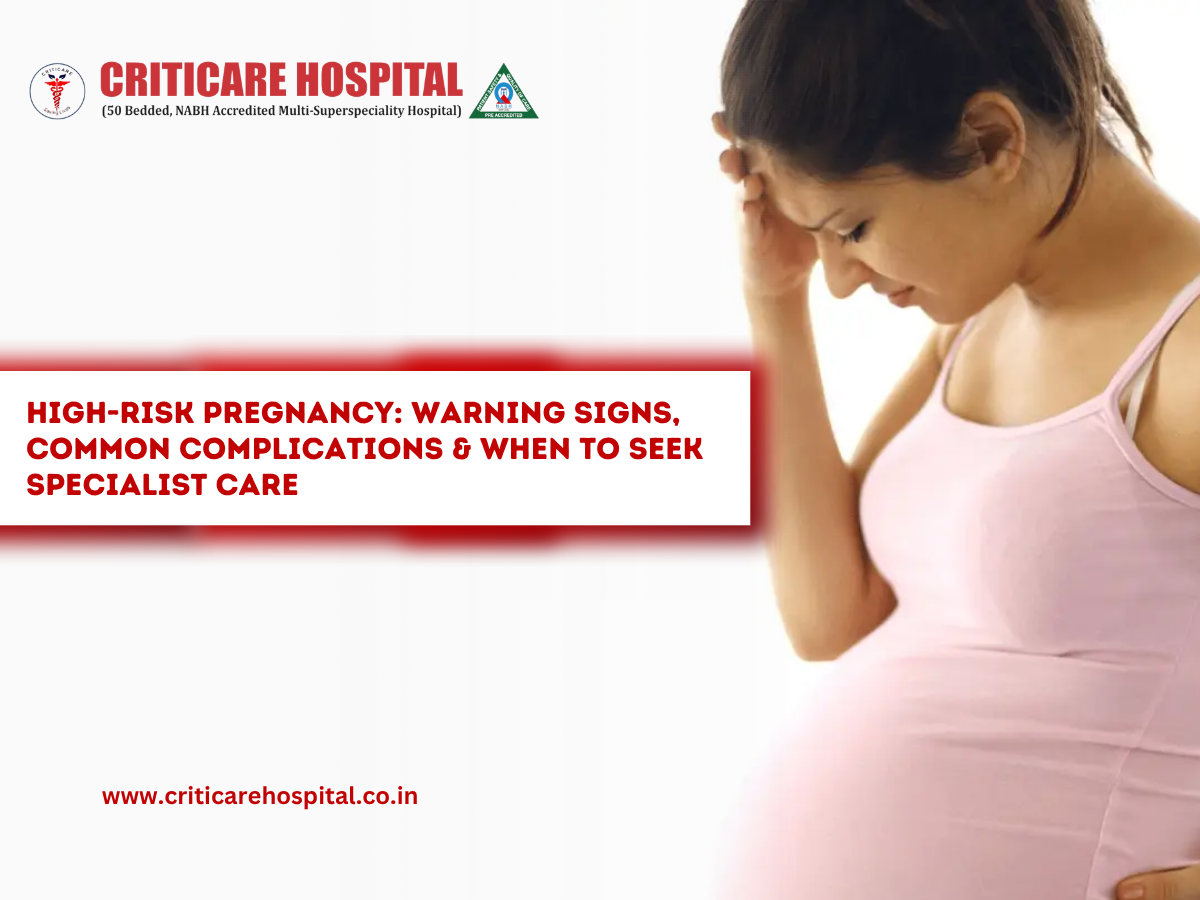
Being told that you have a ‘high-risk pregnancy‘ is understandable to make you feel concerned, but it does not necessarily mean the baby is at risk. It basically refers to a pregnancy that should be watched more closely, due to a few factors that might impact the mother, the baby or both. Most women who have high-risk pregnancies make it to the end of the pregnancy and have healthy babies with the care and attention that they receive at the right time. By grasping what constitutes a “high-risk” pregnancy and what symptoms require prompt attention, expectant mothers can feel more prepared and in control.
What is a high-risk pregnancy?
A pregnancy is considered high-risk if there is a higher risk of it being complicated for the mother, the baby or the delivery. This isn’t a classification of predicting worst-case scenarios; it’s a classification of providing additional care where it is truly required. Whether further monitoring is needed depends on the mother’s age, her health, her pregnancy history, and the way her pregnancy is going.
Risk factors that occur in daily life are common during pregnancy
A pregnancy can be considered high risk because of many factors. These include:
- Under the age of 18 or over 35 years
- Carrying twins, triplets or multiple babies
- Medical issues such as diabetes, high blood pressure or thyroid disorders
- History of miscarriage, premature delivery or loss of pregnancy
- Obesity or gross underweight
- Congenital anomalies, including chromosomal, congenital heart, and congenital muscular problems
- A history of cesarean section or complications of a previous pregnancy
- Some infections while pregnant
If you have one or more of these, you will probably have more regular check-ups and be more closely monitored throughout pregnancy, but it does not mean you will have any complications.
The Common Complications Linked to high-risk pregnancy are outlined below:
Some complications occur more often in high-risk pregnancies, and knowing these complications helps the mother to be alerted to changes in her body. One of the more severe complications is called preeclampsia, which is characterised by high blood pressure and possibly organ strain, and must be managed promptly. Gestational diabetes occurs in women who were not previously known to have diabetes, and requires careful management of blood sugar. Placental problems like a low-lying placenta or early separation may impact the oxygen and nourishment that the baby receives. Another issue is preterm labour, which is defined as labour starting before 37 weeks, and should be evaluated immediately medically. Sometimes, the baby’s growth restriction is also discovered during regular scans, and they may need continued monitoring.
Identify the warning signs that you should never overlook:
Most of the pregnancy discomfort is normal, but some are a cause for immediate medical attention. These include:
- Sudden, severe or prolonged headaches
- Both eyes become cloudy, or you see spots in your vision
- Swelling or pain in the face, hands or legs that come on quickly
- Any bleeding or unusual discharge that is heavy, lasting or occurs at an unusual time.
- Pain and cramping in the abdomen (loin area)
- Less or no movement from the baby
- Contractions before 37 weeks
- Elevated temperature, fever, chills
- Difficulty breathing or chest pain
It is important to report these symptoms to your doctor at once, or the next time you plan to see the doctor.
Why Early and Regular Monitoring Matters?
For pregnancies at high-risk, the number and depth of monitoring may mean the difference between success and failure. Doctors will be able to check how the baby is developing, the mother’s blood pressure and blood sugar, and early signs of complications can be detected before they become a problem. Foetal heart rate monitoring, detailed ultrasounds, and special blood tests are typically ordered more often during these pregnancies. Regular follow-up is vital because a lot of problems can be easily resolved if caught early.
The difference Specialist Care can make
Specialists with a broad knowledge of complicated and changing pregnancies can be of great value in high-risk pregnancies. A specialist in maternal foetal medicine or an experienced obstetrician could draw up an individual care plan depending on the risk factors in question, and monitor and treat the patient as the pregnancy advances. Being able to access high-tech diagnostic equipment, a coordinated medical team, and facilities that can accommodate routine and emergency care is another reassuring factor for mothers going through a high-risk pregnancy.
What Expecting Mothers Can Do
Mothers can do their part to have a healthy pregnancy, while medical care will be the main factor. Even if you feel well, going to all your appointments helps doctors catch changes early in case of subtle changes. It’s also essential to record the baby’s movements and report any significant changes immediately. Adhering to health care provider suggestions regarding food intake, sleep, and medication helps to maintain stability. Most importantly, early identification of warning signs and recognition that there is a need for help at once can make a significant difference in the outcome of the pregnancy.
When to consult a specialist?
If you have any known risk factors, including a pre-existing health condition, any pregnancy complications you had before you became pregnant, or if you are pregnant with multiples, it’s best to talk with a specialist as early in your pregnancy as possible, rather than waiting for the problems to become apparent. Secondly, if any of the above warning signs appear at any point, it is wisest to consult a specialist immediately, instead of waiting for it to pass.
Conclusion
High-risk pregnancy is a period that requires more focus than fear. Most high-risk pregnancies can have a safe and healthy outcome if they are monitored appropriately, receive the proper medical care, and are given awareness of warning signs. Our expert doctors at Criticare Hospital in Lucknow provide holistic care to mothers during a high-risk pregnancy, giving them all the peace and comfort that they need.