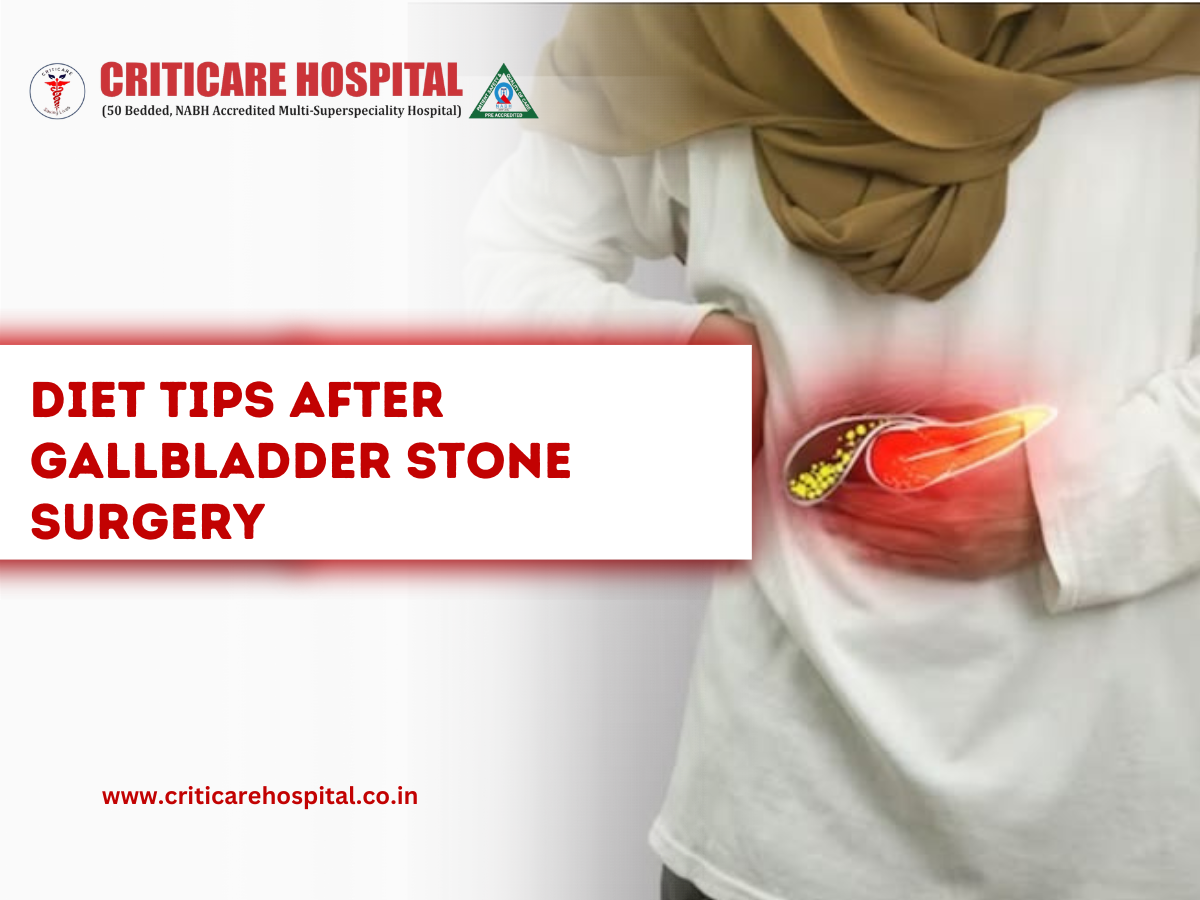
In the post-op recovery of gallbladder stone surgery, recovery is a big step towards a painless life. Nevertheless, the concern of most patients is the way their digestion will be affected after the removal of the gallbladder. Because your body no longer has a storage of bile, which aids in digesting fats, your digestive system requires time and assistance to adapt.
CritiCare Hospital Lucknow, would like to make your recovery as smooth as possible. A regular diet should not be that difficult to revert to. With just a few easy steps, you can prevent some of the most typical problems, such as bloating or indigestion and resume your everyday routine with energy and well-being.
Why Your Diet Should Change Temporarily?
The primary role of the gallbladder was to hold bile generated by the liver and empty it in a strong burst each time you ate fatty foods. It is missing, and the bile drips continuously in your small intestine. This does not imply that your body is no longer able to digest food; it may just not be able to cope with very heavy or greasy food at first. During the initial weeks after surgery, your liver and intestines must get used to a new rhythm. Eating the appropriate foods will prevent diarrhoea and discomfort as you get your new balance.
Starting with a Clear Liquid Diet
Unless otherwise instructed, your doctor will recommend a liquid diet immediately after surgery, usually when you are at the hospital or within the first 24 hours after you are at home. This is the mildest method of renewing your digestive system. Eat only plain water, clear soups, broths and apple juice. Avoid any drinks with caffeine or high amounts of sugar at this stage. When you are in a position to comfortably consume liquids without nausea and bloating, you can gradually transition to soft, solid foods.
Bringing back Soft and Simple Foods
Soon after the first day or two, you can start taking soft foods which are easily digested by the stomach. Consider such food items as plain white rice, boiled potatoes, bananas and dry toast. The khichdi made of moong dal is very thin and simple, and most people in Lucknow consider the khichdi as the best and most appropriate recovery meal since it is not heavy on the stomach and offers the necessary nutrients without any heavy fats. In this stage, one should not consume spicy masalas or heavy oils because this will provide some rest to the digestive system.
The Significance of Low-fat Options
The best rule to follow as you start transitioning back to a normal diet is to continue to have low-fat levels in your diet. The largest triggers of discomfort following surgery on the gallbladder are high-fat, fried, or greasy foods. Rather than frying your meat or vegetables, steam them, boil them or grill them. Select low-calorie proteins such as skinless chicken, fish, or egg whites instead of red meat or fatty. You do this by making sure you use small portions of fats throughout the day so that your constant bile flow has an opportunity to keep abreast of the digestion process.
Selecting the Appropriate Fibre Types
Fibre will also help you to have proper digestion but you have to introduce it gradually. Eating too much and too fast after surgery could result in gas and cramping. Start with cooked vegetables like bottle gourd (lauki), pumpkin (kaddu), and carrots. Slowly replace with whole grains such as oats and brown rice. Fiber is used to control your bowel movements as they are sometimes irregular following surgery. All you need to do is to add one new high-fiber food at a time to ensure your body responds.
The Secret of Little and Often Meals
Changing the frequency of eating is one of the best methods of post-surgery recovery. Rather than having three large and heavy meals, have five or six small meals during the day. A big meal demands a big dose of bile to digest, which your body can no longer deliver in one gulp. The liver and the intestines find it much easier to cope with smaller meals. The habit not only assists in digestion but also maintains your energy level constant all through the day.
What foods to avoid in the first month?
You can get a pain free recovery at home by avoiding some trigger foods at least during the first four weeks. It contains heavy cream, butter, full-fat cheese, and fried foods such as samosas or pakoras. You are also to avoid spicy gravies and processed meat. Even healthy food such as nuts and seeds are to be consumed in very small amounts at the start due to their natural fat content. Less caffeine and carbonated sodas will also help prevent gas and bloating.
Hydration: You Can Do it Right!
It is important to drink plenty of water to ensure that you recover well and that your kidneys and liver are functioning well. Goal of at least 8 to 10 glasses of water per day. Nonetheless, one of the useful tips is not to consume much water during your meal. Rather, consume water 30 minutes before or after consuming food. This will help you keep your stomach not as full and enable your digestive enzymes work better on the recently eaten food.
Paying attention to the signals that your body gives you
The body of each individual is unique. Some individuals may take two weeks to resume a normal diet whereas some may take a month or above. Be careful of the way that you feel after eating. whether a particular food hurts or sends you to the bathroom, then give it a rest and go back to it in a week. A simple food diary may assist you in determining what food is safe and what food requires some time. There is no race in recovery; it is a matter of trying out what suits your new digestive reality.
Specialist Advice in CritiCare Hospital
At CritiCare Hospital in Lucknow, we would like to assist you way beyond the operating room. In the case of severe pain in the abdomen, prolonged fever or yellowing of the skin or eyes post-surgery, please reach out to our medical staff as soon as possible. Although slight digestive alterations are healthy, we are present to make sure that your recovery is on the right way.